

Sun protection has become an essential part of modern skin care, yet several consumers still do not know whether their sunscreen delivers the SPF protection written on the label.
With growing awareness around fake SPF claims, people are becoming more conscious about ingredient transparency, testing standards, and real product performance.
Humuss Beauty believes effective sun protection should combine scientific validation with everyday skin comfort.
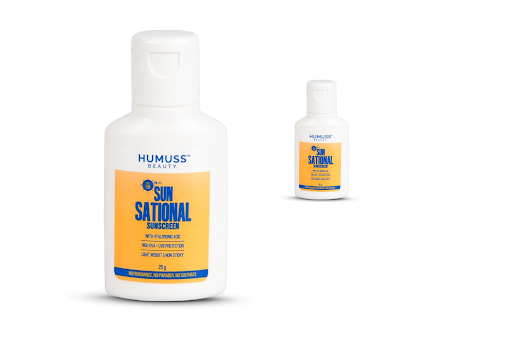
Our sunscreen recently underwent in-vitro SPF testing and achieved a tested SPF value of 50.81 against its claimed SPF 50 rating.
This reflects the growing importance of verified sunscreen testing and formulation accuracy in today’s skin care industry.
For consumers searching for the best sunscreen for face protection, understanding how SPF testing works can help support smarter and more informed skin care choices.
Key Takeaways
- SPF testing helps verify whether sunscreen protection matches label claims
- Broad spectrum sunscreen SPF 50 helps protect against both UVA and UVB exposure
- In-vitro SPF testing supports transparency and consumer trust
- Fake SPF claims are becoming a growing concern among skin care buyers
- The best sunscreen for dry skin should combine hydration with UV protection
- Daily sunscreen use supports long-term skin barrier health
- Humuss Beauty focuses on science-backed skin care and verified sun protection
Why SPF Accuracy Is Becoming a Bigger Conversation
Consumers today are reading skin care labels more carefully than ever before.
People are increasingly searching for:
- Best sunscreen for face
- Broad spectrum sunscreen SPF 50
- Real SPF testing
- Verified sunscreen protection
- Best sunscreen for dry skin
This shift is happening because several sunscreen buyers now prioritize proof and transparency before making purchasing decisions.
Modern consumers are paying closer attention to:
- Ingredient quality
- Scientific testing
- Real SPF validation
- Daily wear comfort
- Skin compatibility
Understanding UVA and UVB Rays
Ultraviolet A (UVA) and Ultraviolet B (UVB) rays affect the skin differently.
|
UV Ray Type |
Impact on Skin |
Long-Term Effect |
|
UVA Rays |
Deep skin penetration |
Premature aging and pigmentation |
|
UVB Rays |
Surface-level damage |
Sunburn and skin irritation |
A broad spectrum sunscreen SPF 50 is designed to help protect the skin against both forms of UV exposure.
How SPF Testing Actually Works
Several people assume SPF numbers are simply marketing labels. In reality, proper sunscreen testing involves scientific evaluation methods that measure how effectively a product protects the skin from UV radiation.
SPF Testing Flow
Sunscreen Formulation
→ Controlled Laboratory Evaluation
→ UV Exposure Analysis
→ SPF Performance Measurement
→ Final SPF Validation Result
In-vitro SPF testing evaluates sunscreen performance under controlled scientific conditions.
This process helps determine whether the claimed SPF aligns with actual measured protection levels.
Our sunscreen achieved a tested SPF value of 50.81 against its claimed SPF 50 rating, supporting formulation consistency and verified performance.
“Scientific validation builds stronger confidence between brands and consumers.”
Myth vs Reality: SPF Myth Busters
Several misconceptions still influence how people buy and use sunscreen. Understanding the facts can help consumers make better skin care decisions.
|
SPF Myth |
Reality |
|
SPF 50 blocks 100% UV rays |
No sunscreen blocks 100% UV radiation |
|
Higher SPF means no reapplication is needed |
Reapplication is still important during prolonged exposure |
|
Sunscreen is only needed outdoors |
UVA rays can penetrate through windows |
|
Dry skin does not need sunscreen daily |
UV exposure can worsen dryness and barrier damage |
|
Any SPF product offers full protection |
Broad spectrum coverage is important for UVA and UVB defense |
Fake SPF Claims: Why Consumers Are Becoming More Aware
The discussion around fake SPF claims has increased significantly in recent years.
Several buyers now question:
- Does the sunscreen actually provide SPF 50 protection?
- Is broad spectrum protection properly tested?
- Does the product protect against UVA and UVB rays?
- Is the sunscreen suitable for daily use?
This growing awareness is encouraging skin care brands to focus more on transparency, testing standards, and verified product performance.
What Makes Broad Spectrum Sunscreen SPF 50 Important
Not all sunscreens provide the same level of protection.
A broad spectrum sunscreen SPF 50 helps support:
- UVA protection
- UVB protection
- Reduced tanning appearance
- Better defense against environmental sun stress
- Long-term skin barrier support
Consumers today want sunscreen that combines:
- Protection
- Comfortable texture
- Lightweight wear
- Hydration support
- Daily usability
Humuss Beauty focuses on creating sunscreen solutions designed for modern environmental exposure and everyday skin comfort.
Why the Best Sunscreen for Dry Skin Needs More Than SPF
Dry skin often requires additional support during sun exposure.
The best sunscreen for dry skin should ideally provide:
- UV protection
- Skin hydration
- Barrier comfort
- Lightweight application
- Non-heavy texture
|
What Users Want |
Why It Is Vital |
|
Broad spectrum SPF 50 |
Better UVA & UVB protection |
|
Hydration support |
Helps reduce dryness |
|
Lightweight texture |
Comfortable daily wear |
|
Non-greasy finish |
Better usability |
|
Skin-friendly formulation |
Supports skin barrier comfort |
Several people stop using sunscreen consistently because formulations feel sticky, oily, or uncomfortable on the skin.
Modern sunscreen formulations are increasingly focused on balancing protection with wearability.
How Broad Spectrum Sunscreen Protects the Skin
UV Protection Process
UV Rays Reach Skin
→ Broad Spectrum Filters Activate
→ UV Absorption & Reflection
→ Reduced Skin Stress
→ Better Everyday Skin Protection
This protective process helps reduce:
- Premature aging appearance
- Sunburn risk
- UV-induced dryness
- Pigmentation concerns
- Environmental skin stress
Choose Verified Sun Protection for Everyday Wear
Looking for the best sunscreen for face protection with scientifically validated SPF performance?
Humuss Beauty offers broad-spectrum sunscreen solutions designed for comfortable daily wear, hydration support, and effective UV defense.
Why Transparency Is Becoming Essential in Skin Care
Modern consumer behavior is strongly influenced by trust signals.
People increasingly prefer brands that provide:
- Scientific transparency
- Ingredient awareness
- Tested formulations
- Honest communication
- Skin-focused education
This is why verified SPF testing and formulation validation are becoming increasingly important in the sunscreen industry.
Humuss Beauty continues focusing on skin care solutions supported by thoughtful formulation and verified performance standards.
“Today’s consumers trust proof over exaggerated claims.”
Conclusion
The conversation around fake SPF claims is changing how consumers evaluate sunscreen products.
People are becoming more informed about broad-spectrum protection, UVA and UVB defense, and the importance of scientifically validated SPF testing.
A properly tested broad spectrum sunscreen SPF 50 supports both immediate and long-term skin protection while helping consumers feel more confident about what they apply daily.
Humuss Beauty continues focusing on modern skin care solutions designed for everyday UV exposure, skin comfort, and science-backed sun protection.
Contact Humuss Beauty for Advanced Sun Care Solutions
Searching for the best sunscreen for dry skin or reliable daily UV protection?
Our sunscreen solutions are designed to support comfortable wear, hydration balance, and broad-spectrum SPF protection for everyday use.
Contact us to discover modern sunscreen solutions created for healthier and better-protected skin.
FAQs
-
What does broad spectrum sunscreen SPF 50 mean?
Broad spectrum sunscreen SPF 50 helps protect the skin against both UVA and UVB rays while offering high UVB protection.
-
Why is SPF testing important?
SPF testing helps verify whether a sunscreen product delivers the level of protection mentioned on its label.
-
What is in-vitro SPF testing?
In-vitro SPF testing is a laboratory-based method used to scientifically evaluate sunscreen protection performance.
-
Why are consumers discussing fake SPF claims?
Several consumers are becoming more aware of whether sunscreen labels accurately reflect actual tested protection levels.
-
What should I look for in the best sunscreen for face?
Look for broad-spectrum protection, SPF 50, lightweight texture, hydration support, and comfortable daily wear.
-
Is sunscreen important for dry skin?
Yes. Sun exposure can increase dryness and weaken the skin barrier, making sunscreen important for skin protection and comfort.
-
Can UVA and UVB rays affect the skin differently?
Yes. UVA rays are commonly linked with aging and pigmentation, while UVB rays are mainly associated with sunburn and surface-level damage.


